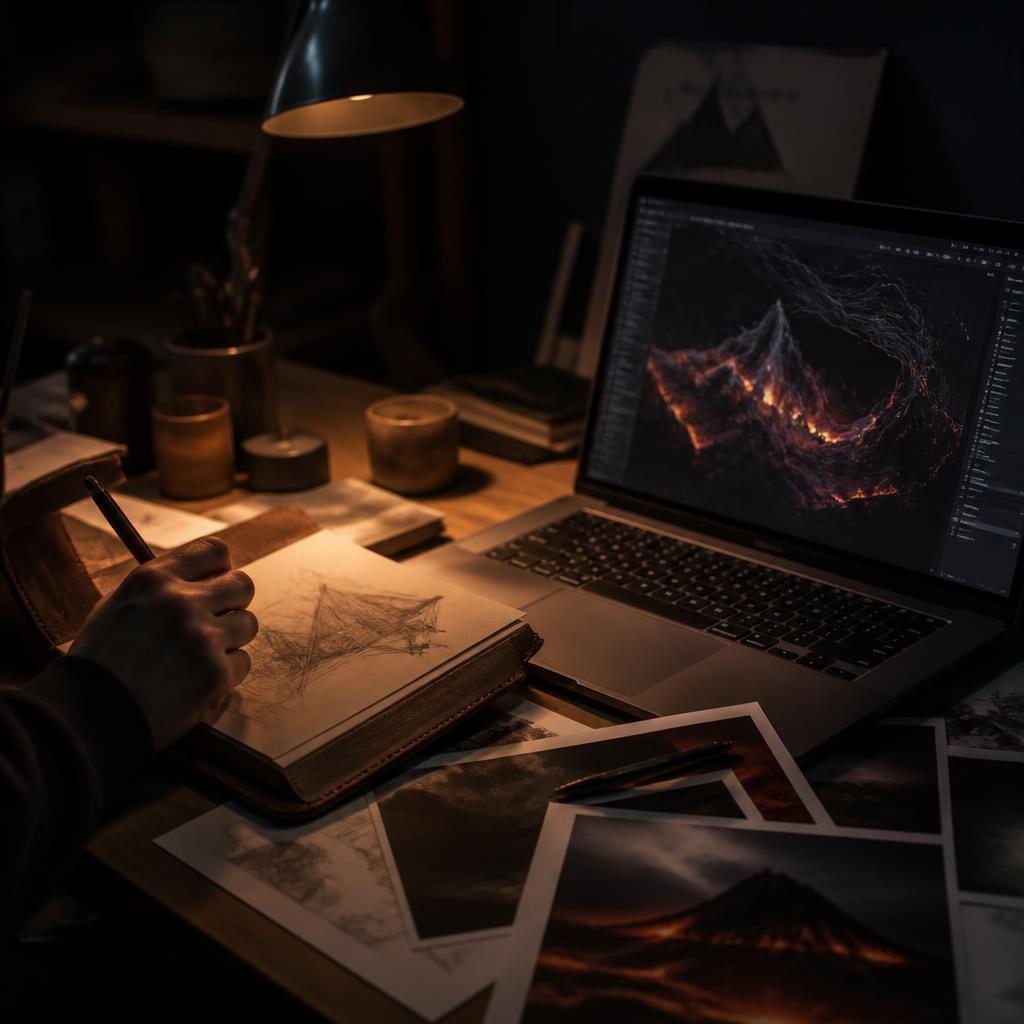
A dimly lit creative workspace with a sketchbook, printed references, and a laptop showing generative imagery

06 — Craft

Creative AI

Generative AI is neither a miracle nor a menace. It is a set of tools, and like any tool it takes on the character of the hand that holds it. Heartforge's creative-AI work is about using these tools with taste, judgment, and care — in service of human voice rather than in place of it.

A stance, not a stack

The interesting question is rarely which model to use. It is what you are trying to say, to whom, and why a machine should have any part in helping you say it. Heartforge begins there.

Used well, generative tools can shorten the distance between a first idea and a workable draft, surface angles a tired writer would miss, and give small teams the reach of much larger ones. Used poorly, they flatten voice, launder cliché, and quietly erode the craft of the people using them.

How the work runs

Engagements are practical and hands-on. We work on real projects — a sermon series, a curriculum, a book chapter, a communications cycle — and build the prompts, workflows, and habits around actual output. The goal is fluency, not dependence.

  • Voice and style calibration against existing writing
  • Prompt libraries and revision protocols
  • Ethical guidelines: attribution, disclosure, and human review
  • Imagery direction and quality control
  • Model selection appropriate to the task
  • Skills that transfer as the tools change

An honest boundary

Some things should still be written by hand, or at least entirely by a person. Pastoral letters. Words spoken at a graveside. The parts of a talk where the room needs to know it is you. Part of the work is naming those places clearly and defending them.